
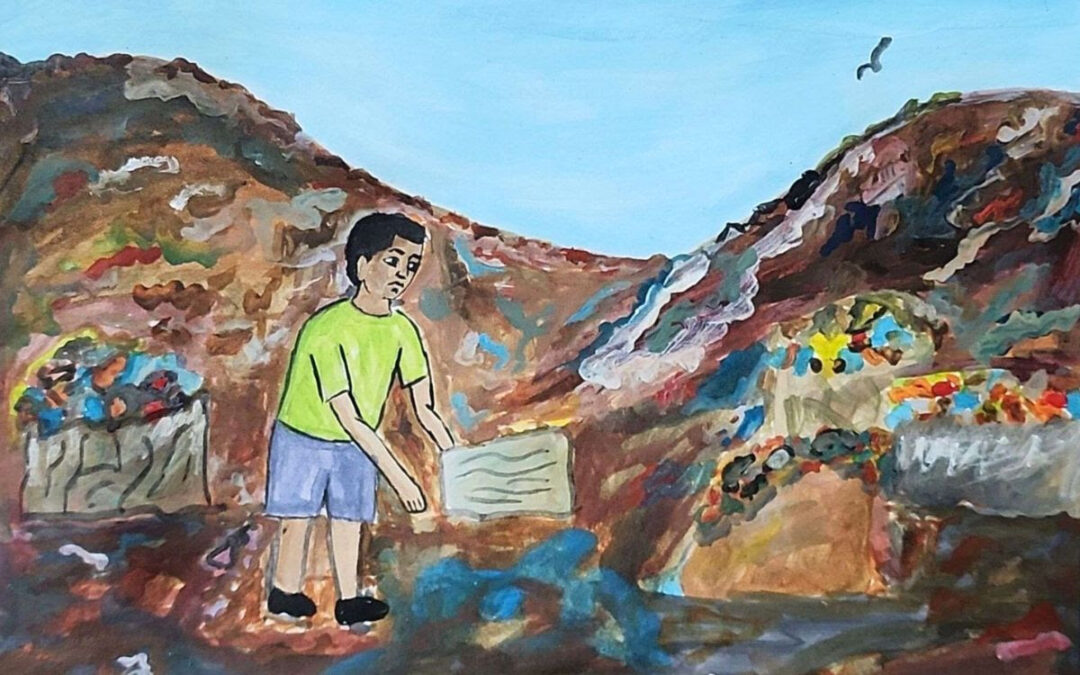
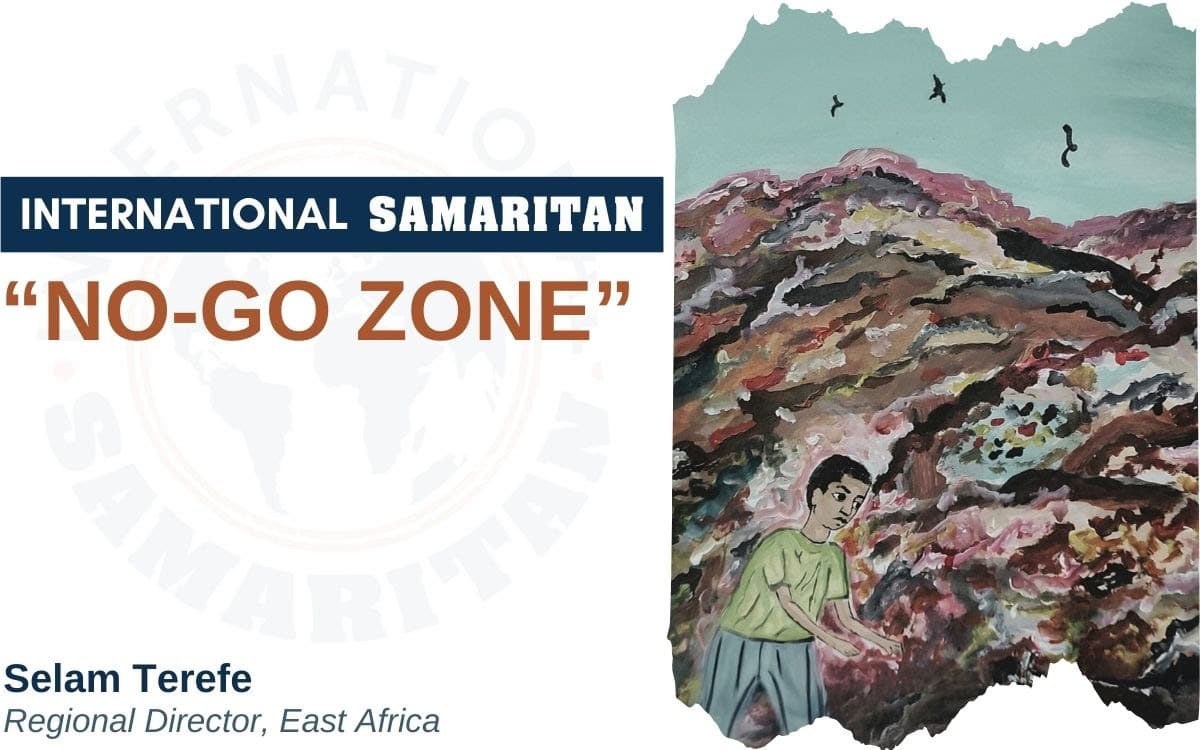
Just a short walk from where Danny grew up in Ethiopia, there is a place most people would never choose to enter: the Kore dumpsite. If you stand at a distance, it looks like smoke, dust, and piles of everything no one wants. For many, it represents dirt and a “no-go zone.” For Danny, it was something else entirely. It was where his imagination came alive.
Danny has always been the kind of boy who notices what others overlook. A bent piece of rusted metal, broken furniture, old household appliances, wires, rusted hinges—these were his building blocks, his inputs for his projects.
“If you like making things,” he once said, grinning, “the dumpsite is the best place. You can find anything there.”
When trucks came from the richer neighborhoods or big hotels, everyone knew. “We recognized them by color,” Danny remembers. “And when we saw them turning toward the dumpsite, we ran.” Most of the time, there would be food still wrapped in plastic or foil. On good days, it even smelled fresh and came with powdered milk. Other times, there were materials worth saving: stronger metals, thicker wires, things you couldn’t find every day.
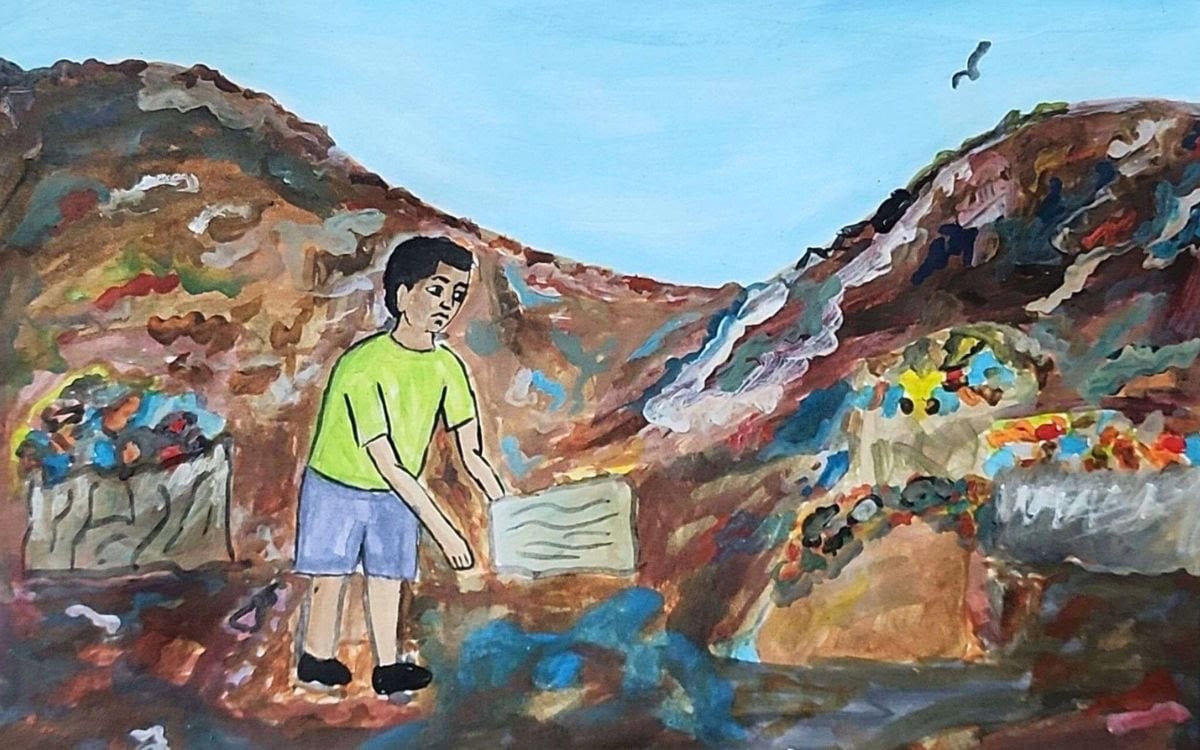
An illustration of Danny at the Kore dumpsite, drawn by other Samaritan Scholars in Ethiopia. Read more at intsam.org/books.
Not everything was theirs to keep. The older boys who are the leaders controlled the valuable items. “The heavy metals and spoons were not for us,” Danny explains. “They took those. But they let us eat.” It wasn’t fair, maybe, but it was how things worked.
The hardest part was the nights, the rainy seasons.
“I remember waking up wet,” Danny says quietly. “When it rained, there was nowhere to hide. Your clothes were soaked. The ground was soaked. If you had cardboard or a blanket, it was soaked too. I hated waking up in the middle of the night like that cold and shaking.”
It was during those nights that Danny’s creativity became more than a hobby. It became survival. He started watching carefully for large metal sheets in the garbage trucks. If he could grab one, he could patch the roof of his small home. One good sheet of metal meant fewer nights waking up drenched.
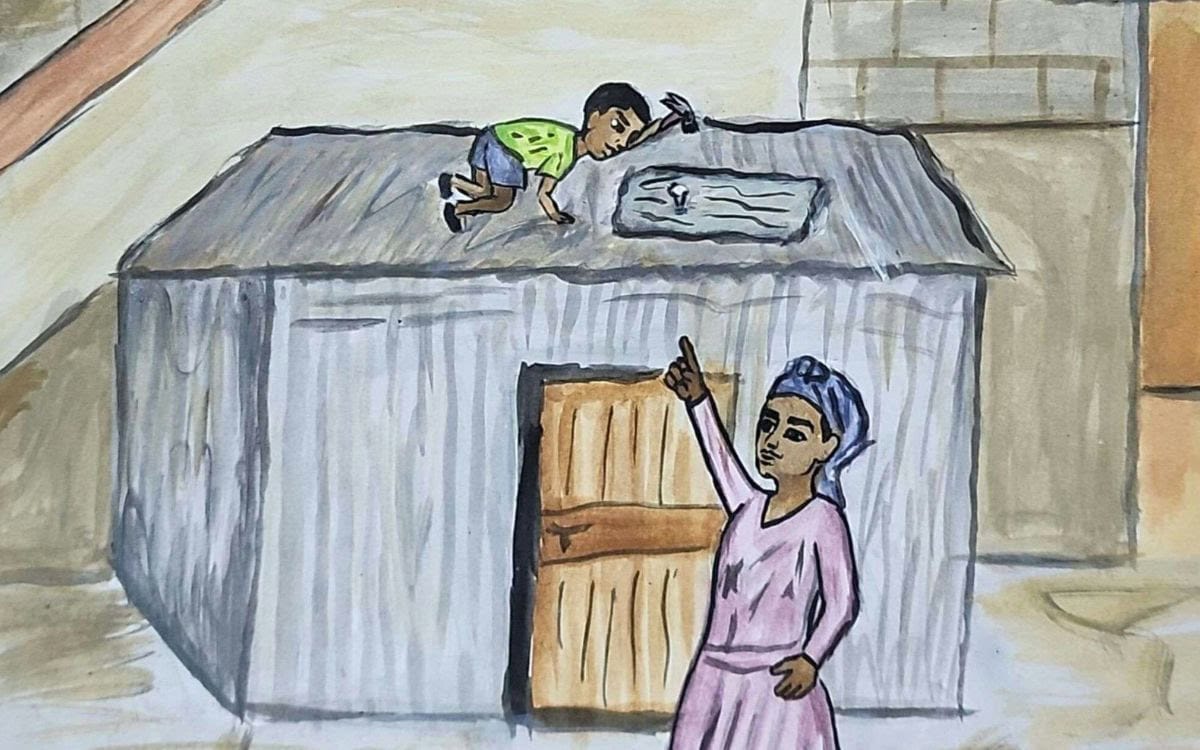
In the book “I Can Fix It,” Danny is determined to repair his leaking roof. Learn more at intsam.org/books.
Danny’s story has just been published as a children’s book, with illustrations drawn by other Samaritan scholars. When asked what it feels like to have a book written about his life, Danny smiles. “I didn’t know my life was important,” he says. “Now children will read it. Maybe they will see that even if you start with nothing, you can still create something.”
“I Can Fix It” is not just about a boy at a dumpsite. It is about seeing differently and refusing to believe that your surroundings define your future. Danny’s story shows us that imagination can grow anywhere, even in the most unlikely places.
Danny’s story is now a children’s book! Watch as Selam and Danny talk about his story and his life now, as a graduate of the scholarship program.

Selam Terefe, Regional Director, East Africa
Selam has years of experience in international development and aid. Her education and career have given her a thorough and in-depth knowledge of gender, legal, social, and political issues of East Africa with a special focus on Ethiopia. Selam is passionate about development in Africa and a strong believer in effective partnerships.
Two Secret Pathways to Prosperity
How do we break the chains of poverty? This is the last in a three-part series on how we achieve...
Poverty to Prosperity
We received two responses last week to our invitation to share your story about the personal...
What’s Your Story?
Someone, somewhere in your family line, broke out of poverty, an accomplishment that changes the...
It’s Not an Impossible Dream
International Samaritan’s founders were shocked when they visited a dumpsite in Guatemala. With...
It’s a Wonderful World
One of the blessings of my role here at International Samaritan is to visit with our teams and...
Showing Love with Food
In Honduras, “everyone knows how to make nacatamales,” says Ronia Romero, our program director in...
